



























In an industry where margins are often decided by the litre, every decision made on the job site is a financial one. While most fleet managers focus on engine maintenance and operator training to manage costs, one of the most significant variables is often overlooked: the shape of the attachment at the end of the arm, also known as bucket geometry.
Understanding excavator fuel consumption requires looking past the engine and toward the friction occurring in the trench.
The Drag Tax: Why Box Designs Cost You Money
The "drag tax" is a very real operational expense caused by standard box-shaped buckets. When a bucket is perfectly rectangular, the side plates create constant friction against the ground throughout the entire digging motion. This resistance forces the machine to work harder and pull more power from the engine just to move through the soil.
When your equipment is fighting unnecessary friction, your excavator's fuel efficiency drops significantly. Over a 10-hour shift, those extra drops of diesel required to overcome drag add up to a measurable loss in project profitability.
The Vacuum Effect: Sticky Clay and Suction
Poor bucket geometry creates another hidden cost: the vacuum effect. In many Australian soil conditions, particularly sticky clay, a non-tapered bucket creates a suction trap. This requires the machine to use more force to lift the load out of the ground and, more importantly, forces the operator to waste time and fuel shaking the bucket to get the material to drop.
These wasted seconds might seem minor, but they directly inflate your cycle times. A machine that spends five extra seconds per scoop trying to release material is a machine that is underperforming its potential output for the day.
The Expert Solution: Tapered Excavator Buckets
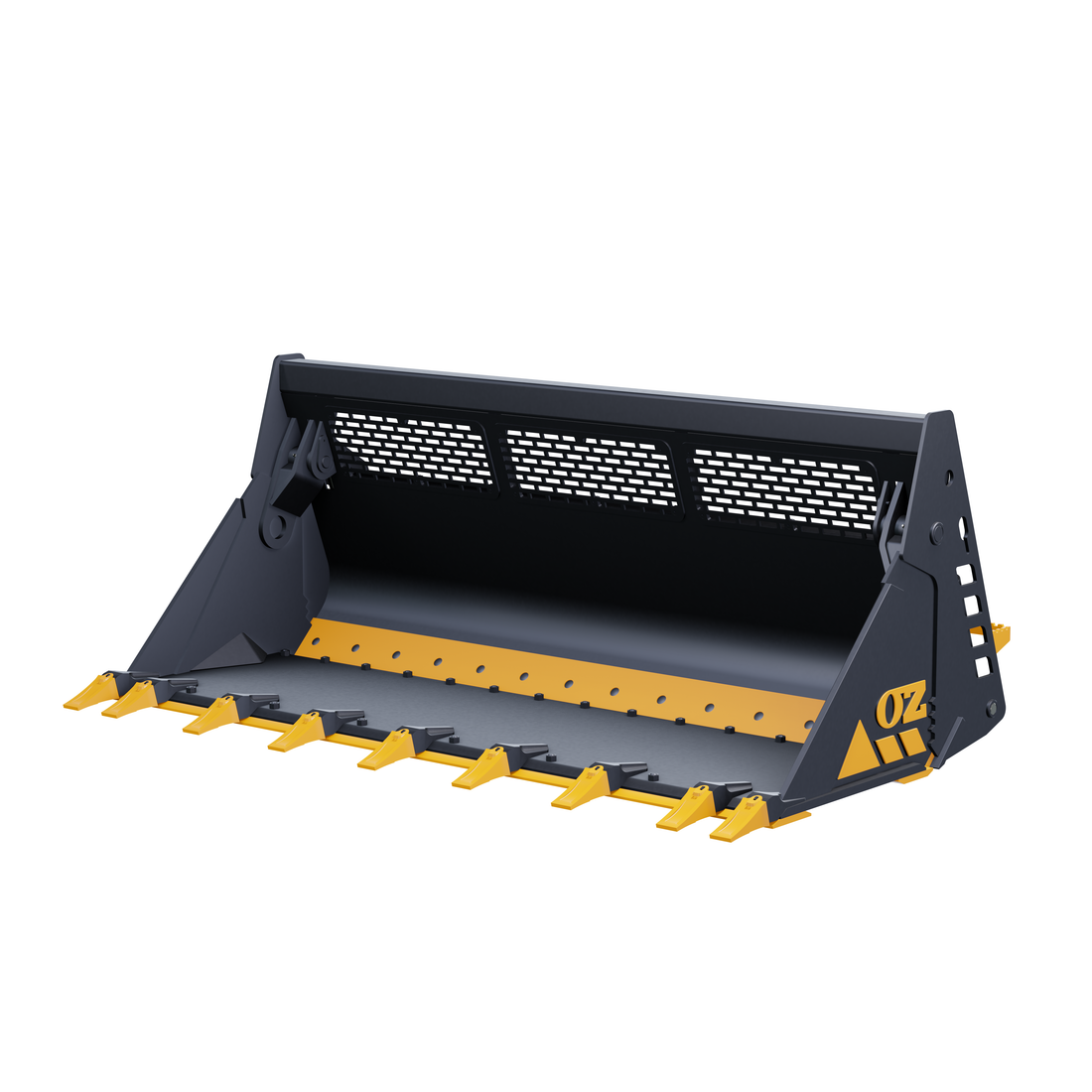
The engineering cure for the drag tax is simple but precise: tapering. High-quality tapered excavator buckets are designed to be wider at the mouth than they are at the rear. This ensures that only the cutting edge and the first few centimetres of the bucket are in contact with the ground.
As the bucket moves through the soil, the tapered sides create immediate clearance, virtually eliminating side wall friction. This design ensures that the machine's power is spent on moving earth rather than overcoming the resistance of its own attachment.
Positioning Your Fleet for Efficiency
At OZ Buckets, we treat the shape of an attachment as a critical financial lever. Our builds incorporate specific features designed to maximise the fill factor and ensure a clean release every time:
-
Tapered Side Plates: These ensure the bucket clears the trench easily and prevent material from binding against the sides.
-
Dual Radius Bucket Design: This curved shell geometry encourages the material to curl into the bucket with less resistance, ensuring you get a full load with every pass.
-
Self-Cleaning Geometry: The combination of these features allows material to drop instantly, significantly reducing your cycle times and keeping your haul trucks moving.
By investing in smarter bucket geometry, you are not just buying a tool: you are installing a long-term fuel-saving programme for your business.
Stop paying the drag tax on every scoop. See how OZ Buckets’ tapered designs can lower your fuel consumption. Reach out and talk with our specialist team today.